
AI tools have definitely moved from curiosity to critical when it comes to businesses. Using the right AI tools can drastically save time, improve productivity, and give your business the edge against the competition. Here are the Top 10 AI Business Tools for 2026.
1. ChatGPT – The AI Brain of Your Business
By now, most people have not only heard about ChatGPT but may have even played around with it. However, you might be surprised to know that ChatGPT has continued to grow and improve greatly in a very short amount of time.
At its core, it functions like an always-on digital assistant that can help with:
- Marketing copy and content creation
- Sales scripts and proposals
- Customer support responses
- Market research and analysis
- Internal documentation and SOPs
Businesses are using ChatGPT to replace hours of repetitive thinking work—drafting emails, brainstorming campaigns, summarizing data, and even training employees.
The real power comes when you stop using it casually and start building repeatable workflows around it. When used correctly, ChatGPT becomes a productivity multiplier across your entire organization.
2. Google Gemini – AI Inside the Tools You Already Use
Not to be outdone by OpenAI, Google Gemini is not only now a rival AI tool, but also has some advantages. Google Gemini stands out because it’s deeply integrated into the Google ecosystem.
Instead of learning a brand-new platform, Gemini enhances tools businesses already rely on:
- Gmail for drafting and summarizing emails
- Google Docs for writing and editing content
- Google Sheets for analyzing data
- Google Search for research and insights
For teams living inside Google Workspace, Gemini reduces friction. It speeds up decision-making, automates tedious tasks, and helps teams move from idea to execution faster—without changing how they work.
3. Manychat – Turning Conversations Into Revenue
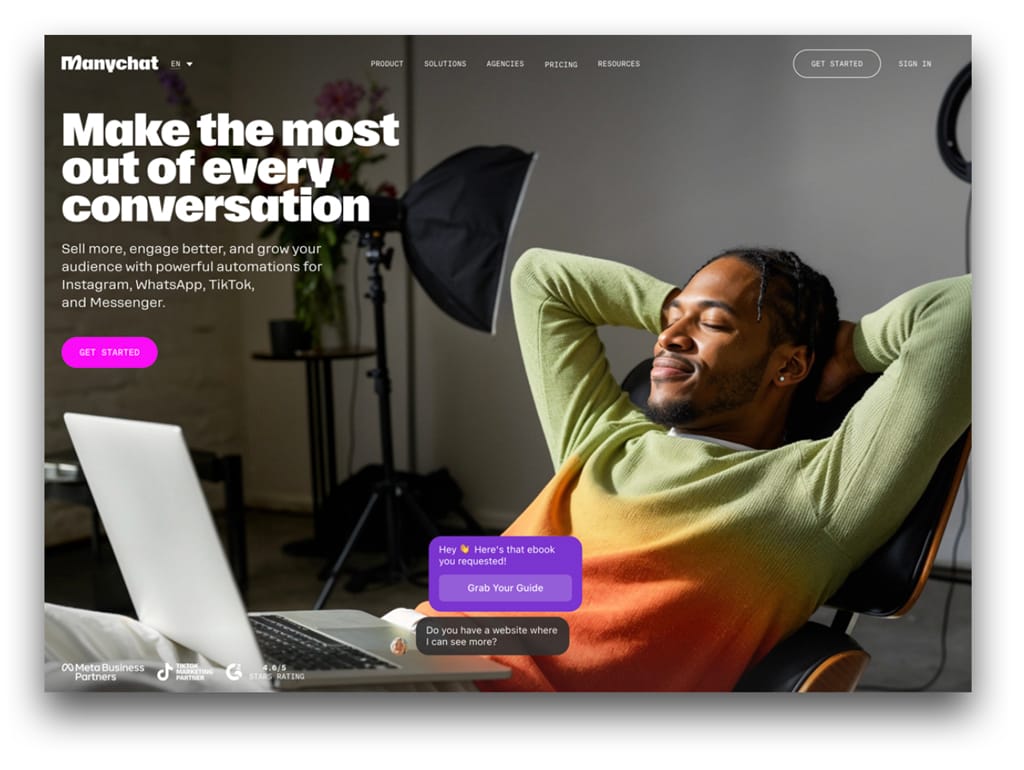
While tools like ChatGPT and Google Gemini do a good job with many business tasks, there are also AI chatbots that are even more specifically geared towards assisting business owners. Manychat is one of the most powerful AI tools for social media automation.
It allows businesses to:
- Automate Instagram, Facebook, and WhatsApp DMs
- Capture leads automatically
- Qualify prospects with AI-driven conversations
- Trigger follow-ups and sales flows
Instead of manually responding to every message, businesses use ManyChat to turn social engagement into 24/7 lead generation and sales automation.
This is especially effective for creators, coaches, agencies, and eCommerce brands that rely on social platforms for customer acquisition.
4. Chatfuel – AI-Powered Customer Support at Scale
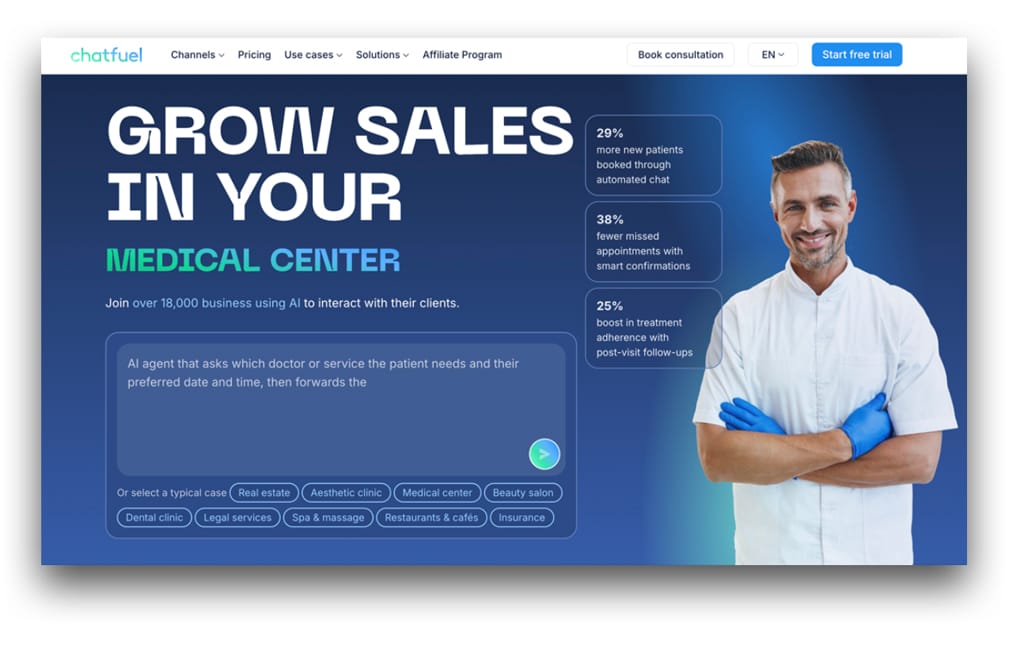
Chatfuel is another excellent chatbot that can aid and improve many businesses. Chatfuel focuses heavily on AI chatbots for customer service and eCommerce.
Businesses use Chatfuel to:
- Answer FAQs automatically
- Track orders and shipping questions
- Reduce support tickets
- Provide instant responses across platforms
The key benefit here is scale. Chatfuel allows businesses to handle thousands of conversations simultaneously—without growing a support team.
When implemented properly, it improves customer satisfaction while cutting operational costs.
5. HeyGen – AI Video Without Cameras or Studios
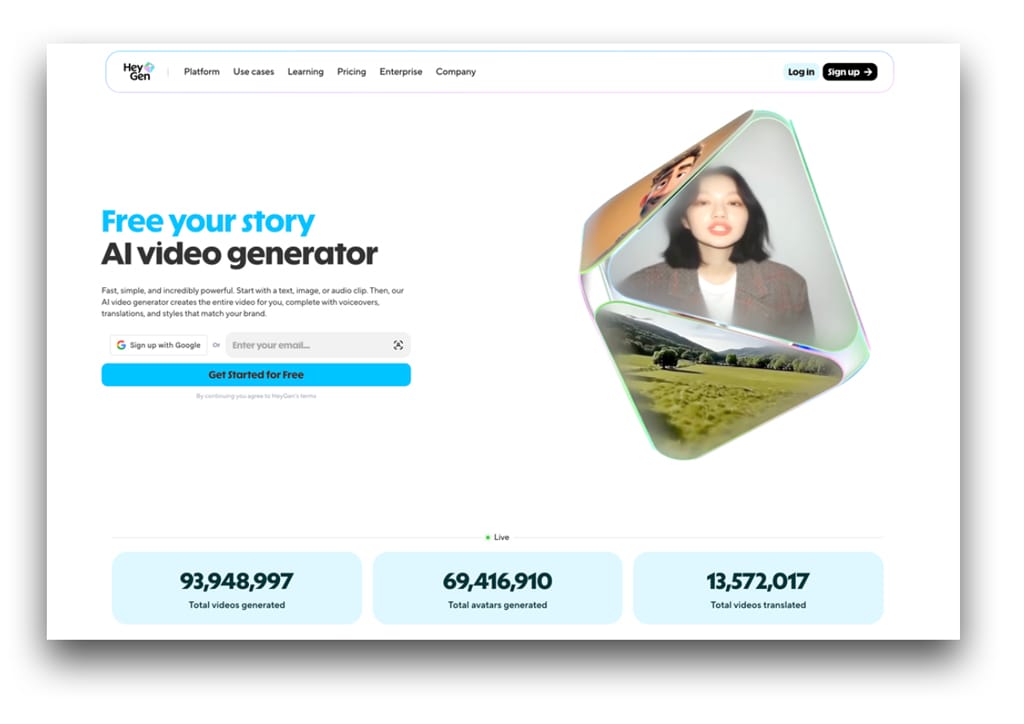
While there are many excellent AI video tools available, for businesses HeyGen is perhaps the best for creating avatars, training videos, and sales and product demo videos. HeyGen makes it possible to create professional videos without filming anything.
With AI avatars and text-to-video technology, businesses can produce:
- Sales and landing page videos
- Product demos
- Training and onboarding videos
- Multilingual content
This is especially powerful for global teams or brands that need consistent messaging across markets.
HeyGen removes the time, cost, and friction traditionally associated with video production—making video a scalable business asset instead of a bottleneck.
6. Synthesia – Enterprise-Grade AI Video Communication
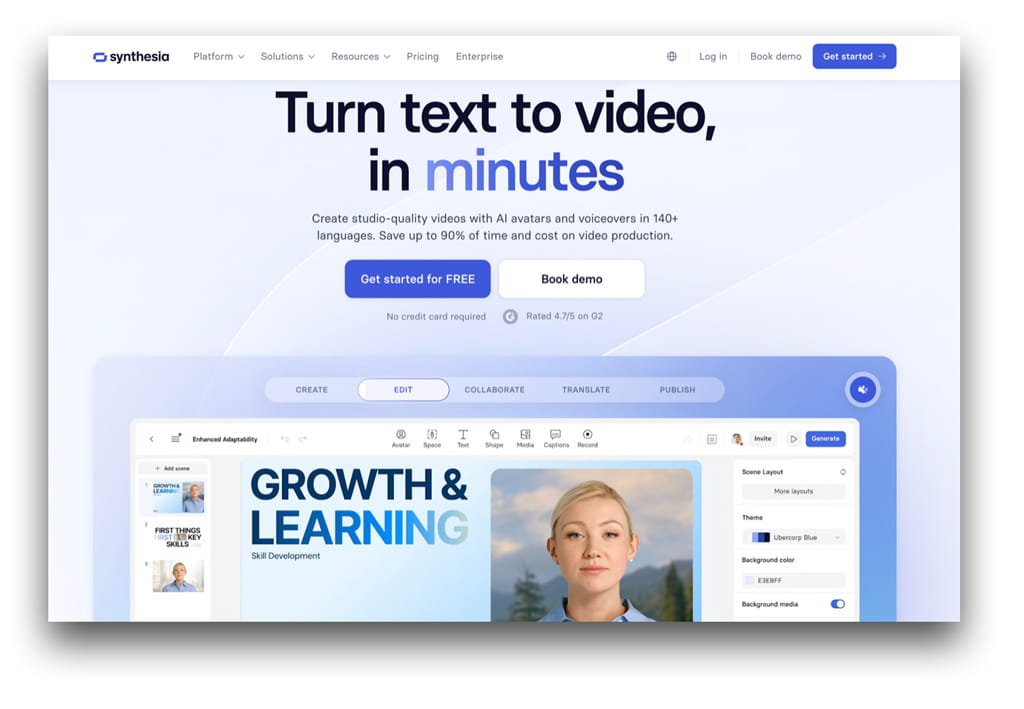
For enterprises and larger organizations, Synthesia is the AI video tool best suited for onboarding and training videos–perfect for HR. It’s a great time saver that produces quality results. Synthesia is widely used by large organizations for internal communication and training.
Businesses rely on Synthesia to:
- Create onboarding videos
- Produce compliance and HR training
- Standardize internal messaging
- Localize content for global teams
What makes Synthesia stand out is its professional polish and consistency. It ensures every employee receives the same high-quality information—without repeated live training sessions.
This saves time, money, and organizational bandwidth as companies grow.
7. Canva – Design and Video for Non-Designers
While it may be best known as a graphics tool, Canva has evolved from a design tool into a full AI-powered creative platform.
Businesses use Canva for:
- Social media graphics
- Presentations and pitch decks
- Ads and marketing visuals
- Short-form and long-form video content
Its AI features help generate layouts, resize assets automatically, and speed up creative workflows.
For businesses without an in-house design team, Canva removes one of the biggest friction points in marketing: visual production.
8. Scribe – Automated SOPs and Process Documentation
Scribe quietly solves one of the biggest scaling problems in business: documentation.
Scribe automatically records workflows and turns them into:
- Step-by-step guides
- Training documentation
- Internal SOPs
- Knowledge bases
Instead of manually writing instructions, teams simply perform the task once—and Scribe does the rest.
This is incredibly valuable for onboarding, delegation, and maintaining consistency as teams grow.
9. Zapier – The Automation Backbone
Zapier connects your tools and automates repetitive tasks across your business.
Examples include:
- Sending leads from forms into CRMs
- Triggering emails after purchases
- Updating spreadsheets automatically
- Connecting chatbots to internal systems
Zapier doesn’t replace employees—it removes busywork.
When combined with AI tools like ChatGPT, Zapier becomes the invisible infrastructure that keeps operations running smoothly without constant human input.
10. Tidio – AI Chat for Sales and Support
Tidio blends AI chat, live chat, and automation into one platform.
Businesses use Tidio to:
- Answer customer questions instantly
- Recover abandoned carts
- Qualify leads in real time
- Improve conversion rates
Unlike traditional chat tools, Tidio uses AI to learn and improve responses—making customer interactions faster and more effective over time.
It’s especially popular with eCommerce brands and service-based businesses.
Conclusion: AI is Here and That’s a Good Thing!
AI tools aren’t about replacing people—they’re about freeing people to focus on higher-value work.
The businesses that win in the next few years won’t be the ones using the most tools—but the ones using the right tools strategically.